Couples Finance
Debt Payoff Strategies for Couples: Snowball vs Avalanche Method (2026)
Compare the debt snowball vs avalanche method and find the best debt payoff strategy for couples. Step-by-step guide with comparison tables, examples, and a free calculator.
Managing debt as a couple means two incomes, two perspectives, and one shared financial future. The method you choose to pay off that debt can mean the difference of thousands of dollars — or years of extra payments. This guide breaks down the debt snowball vs avalanche debate in plain terms, with a side-by-side comparison designed specifically for couples navigating their debt together.
Whether you are dealing with credit card balances, car loans, student debt, or a combination of all three, you and your partner need a plan that works for both of you. The snowball and avalanche methods are the two most researched and widely recommended debt payoff strategies. Both work — but they suit different types of couples and different debt profiles.

This article covers everything: how each method works step by step, a detailed comparison table, a real couples example, common mistakes, hybrid strategies, free tools, and answers to the five questions couples ask most about debt payoff. By the end, you will know exactly which approach belongs in your household budget.
Last updated: June 2026
Table of Contents
- What Is the Debt Snowball Method?
- What Is the Debt Avalanche Method?
- Snowball vs Avalanche: Side-by-Side Comparison
- Real Couples Example: Snowball vs Avalanche in Action
- Which Method Is Better for Couples?
- A Hybrid Approach: Combining Snowball and Avalanche
- How to Start Your Debt Payoff Journey as a Couple
- Common Mistakes Couples Make When Paying Off Debt
- Tools and Resources for Couples
- Frequently Asked Questions
- Sources & Methodology
- About the Author
What Is the Debt Snowball Method?
The debt snowball method is a debt payoff strategy popularized by personal finance author Dave Ramsey. The core principle is simple: pay off your smallest debt first, regardless of interest rate, then roll that payment into the next smallest debt. Over time, your payments accumulate like a snowball rolling downhill — growing larger with each debt you eliminate.
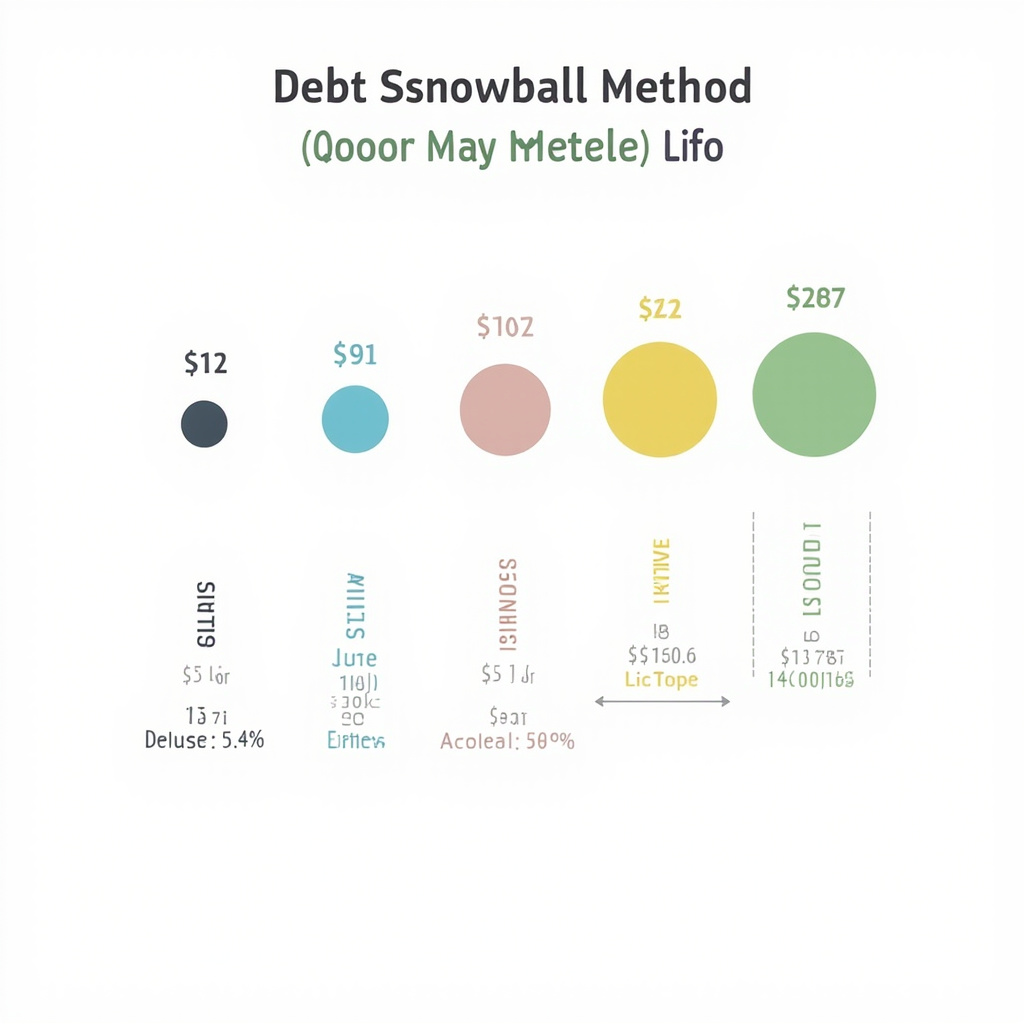
Here is how it works in practice for a couple:
- List all debts from smallest to largest balance. Ignore interest rates for now.
- Make minimum payments on every debt.
- Put every extra dollar toward the smallest balance. Whatever you can scrape together beyond minimums goes here.
- When the smallest debt is paid off, celebrate. Then take that entire payment amount and apply it to the next smallest balance.
- Repeat until all debts are gone.
Why Couples Like the Snowball Method
The snowball method is powerful for couples because it generates quick wins. Paying off a debt — even a small one — triggers a dopamine hit that motivates continued effort. For a couple working as a team, that win can feel like a shared victory and reinforce the habit of communicating about money.
For example, a couple with four debts might pay off a $500 credit card in just two months using the snowball method. That early success builds confidence and momentum heading into larger, harder debts.
The snowball method also keeps things simple to track. With only one active target debt at a time, it is easy for both partners to know exactly where the household is focused.
If you are looking for a structured way to manage your household budget while paying off debt, a tool like the YNAB (You Need A Budget) app (available at Amazon US with tag=theforge05-20 or Amazon AU with tag=doublefury-22) can help couples assign every dollar intentionally and track progress toward debt payoff goals together.
What Is the Debt Avalanche Method?
The debt avalanche method takes the mathematically precise approach: target the debt with the highest interest rate first, regardless of balance size. You make minimum payments on everything, and every extra dollar goes toward the highest-interest debt until it is eliminated. Then you move to the next highest-rate debt.
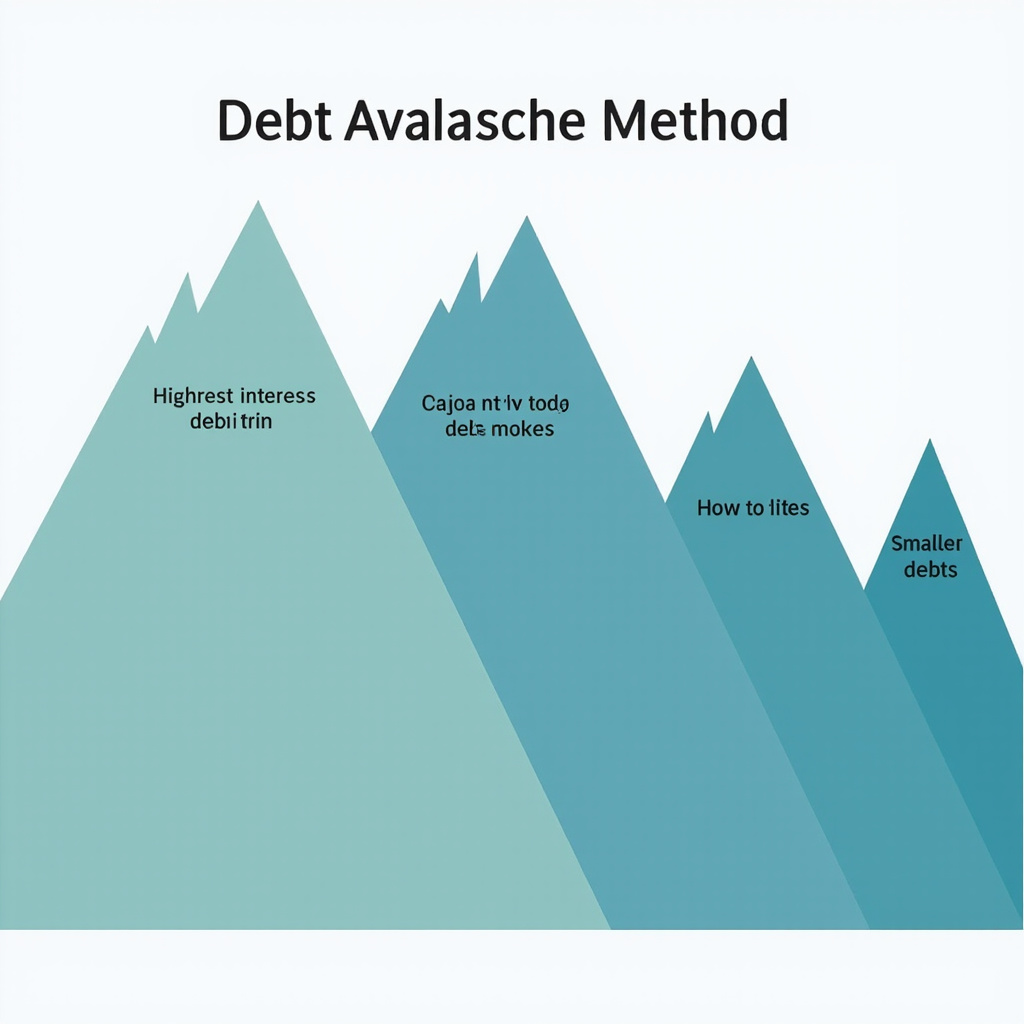
Here is the step-by-step process:
- List all debts ordered by interest rate, highest to lowest. Ignore balance sizes.
- Make minimum payments on every debt.
- Direct all extra funds toward the highest-interest debt.
- Once that debt is paid off, move to the next highest-rate debt.
- Repeat until all debts are paid.
Why the Avalanche Method Saves Couples More Money
The avalanche method is almost always the more cost-effective choice. By eliminating high-interest debt first, you reduce the total amount of interest that accrues over the life of your debt. This can mean thousands of dollars saved compared to the snowball method, especially when interest rate differences between debts are significant.
Consider a couple carrying a $10,000 credit card balance at 24.99% APR alongside a $3,000 personal loan at 8% APR. The avalanche method would target the credit card first — saving potentially $2,000 or more in interest compared to tackling the smaller personal loan first.
The avalanche method also aligns with how most financial experts think about debt: interest is a cost, and you want to minimise total cost.
Snowball vs Avalanche: Side-by-Side Comparison
| Feature | Debt Snowball | Debt Avalanche |
|---|---|---|
| Order of payoff | Smallest balance first | Highest interest rate first |
| Mathematical efficiency | Lower | Higher (saves most interest) |
| Psychological motivation | Higher (faster wins) | Lower (wins take longer) |
| Best for | Couples who need momentum | Couples with high-rate debt spread |
| Typical interest savings | Less over time | More over time |
| Complexity | Simple to track | Simple to understand |
| Risk of discouragement | Lower | Higher if progress feels slow |
| Works well when | Balances are small and similar | One debt has much higher rate |
Both methods require the same fundamental discipline: making minimum payments on all debts while finding extra money to put toward the active target. Neither method works if the household budget does not support consistent above-minimum payments.
Real Couples Example: Snowball vs Avalanche in Action
Let us look at a real-world scenario for a couple — the Hendersons — to see how each method plays out in practice.
The Hendersons' Debt Profile
- Credit Card A: $4,200 balance, 22.99% APR, minimum payment $84/month
- Credit Card B: $7,800 balance, 18.99% APR, minimum payment $156/month
- Car Loan: $12,500 balance, 6.5% APR, payment $285/month
- Personal Loan: $3,000 balance, 10.99% APR, payment $110/month
Total monthly minimum payments: $635 Extra funds available for debt payoff: $350/month
Debt Snowball Approach
The Hendersons list their debts by balance (smallest to largest):
- Personal Loan: $3,000 (target first)
- Credit Card A: $4,200
- Credit Card B: $7,800
- Car Loan: $12,500
Month 1-8: Extra $350/month goes to Personal Loan. Paid off in approximately 8 months.
Month 9-18: Extra $460/month (original $350 + $110 former personal loan payment) goes to Credit Card A. Paid off in approximately 10 months.
Month 19-30: Extra $544/month goes to Credit Card B. Paid off in approximately 11 months.
Month 31+: Remaining $829/month goes to Car Loan.
Total interest paid: approximately $6,100
Debt Avalanche Approach
The Hendersons list their debts by interest rate (highest to lowest):
- Credit Card A: 22.99% APR (target first)
- Credit Card B: 18.99% APR
- Personal Loan: 10.99% APR
- Car Loan: 6.5% APR
Month 1-12: Extra $350/month goes to Credit Card A. Paid off in approximately 12 months.
Month 13-23: Extra $434/month (original $350 + $84 former credit card payment) goes to Credit Card B. Paid off in approximately 10 months.
Month 24-31: Extra $590/month goes to Personal Loan. Paid off in approximately 8 months.
Month 32+: Remaining $700/month goes to Car Loan.
Total interest paid: approximately $4,850
The Difference for the Hendersons
In this example, the avalanche method saves the Hendersons approximately $1,250 in interest over the snowball method. The more spread out the interest rates are, the larger this gap becomes.
However — and this is crucial for couples — the snowball method would have given them a psychological win in month 8 when the Personal Loan was paid off. The avalanche method's first payoff does not come until month 12 (Credit Card A). That four-month difference can matter enormously for a couple's motivation and commitment to the process.
The bottom line: Mathematically, avalanche wins. Psychologically, snowball may keep some couples committed longer. The choice depends on your household's specific situation.
Which Method Is Better for Couples?
The answer depends on three factors specific to your household:
1. How Large Is the Interest Rate Spread?
If your debts all have similar interest rates (e.g., several credit cards all between 18-22% APR), the difference between snowball and avalanche will be relatively small — both in money saved and in time to first payoff. In this case, go with snowball for the motivational boost.
If one or two debts have significantly higher rates than the others (a common scenario: a payday loan or store credit card at 29.99% sitting alongside a car loan at 5.9%), avalanche is the clear winner mathematically.
2. How Much Does Your Household Need Visible Momentum?
This is not a trivial question. Research from Northwestern University's Kellogg School of Management found that the sense of progress from paying off a debt improves follow-through on subsequent financial goals. If either you or your partner is the type who needs to see results quickly to stay engaged, snowball may be the better choice despite the slightly higher interest cost.
On the other hand, if both partners are naturally disciplined savers who can stay focused on a long-term goal, avalanche maximises your financial outcome without risking motivation loss.
3. What Is Your Total Debt Load?
For couples with many small debts (multiple credit cards, medical bills, payday loans), snowball's quick wins can provide critical morale boosts during a potentially years-long payoff journey. For couples with one or two large debts and a significant income to throw at them, avalanche's mathematical advantage kicks in faster.
Decision Framework for Couples
| Situation | Recommended Method |
|---|---|
| High interest rate spread (>5% between highest and lowest) | Avalanche |
| Similar interest rates across all debts | Snowball |
| One partner needs visible progress to stay motivated | Snowball |
| Both partners are disciplined and long-term focused | Avalanche |
| Large number of small debts | Snowball |
| Small number of large debts with high rates | Avalanche |
A Hybrid Approach: Combining Snowball and Avalanche
Many financial planners — including this author — recommend a hybrid approach that captures the best of both methods.
The Hybrid Strategy Step by Step
-
Use snowball for the first one or two debts. Choose debts with small balances (under $2,000) so you can knock them out quickly. This gives the household two or three quick wins in the first few months.
-
Switch to avalanche for all remaining debts. Once you have built momentum and confidence, switch to the mathematically optimal approach for your larger remaining debts.
This approach is particularly powerful for couples because it addresses the emotional reality of debt payoff. The first two paid-off debts create a shared sense of accomplishment and teamwork. By the time you switch to avalanche, both partners have seen the system work and are more likely to stay committed for the longer haul.
When to Stay Pure Avalanche
The hybrid approach is not always necessary. If your lowest-balance debts also happen to have the lowest interest rates (e.g., a small personal loan at 6% and a large credit card at 24%), then avalanche from the start and you lose nothing. You get both the motivational win and the mathematical win.
How to Start Your Debt Payoff Journey as a Couple
Step 1: Get Everything on the Table
Before you can make a plan, you need a complete picture. Both partners must list every debt: creditor name, current balance, interest rate, minimum payment, and due date. This is not a judgement exercise — it is an information exercise.
Pro tip: Pull actual statements rather than relying on memory. Couples are often surprised to discover debts they have been avoiding thinking about.
Step 2: Agree on a Shared Goal
Debt payoff is a team sport. Both partners need to agree on the target date and the monthly extra payment amount. This conversation should cover:
- What does financial freedom look like to each of us?
- How much can we realistically put toward debt each month?
- Are we willing to make short-term lifestyle sacrifices for long-term gain?
These conversations are not always easy. If your household needs help navigating them, consider using a free budget worksheet from a site like Plan Family Meals (a related site in our network focused on financial planning for households) to structure the discussion.
Step 3: Build a Bare-Bones Budget
Your budget must clearly show:
- All income sources
- All fixed expenses (rent, utilities, insurance, minimum debt payments)
- All variable expenses (groceries, gas, entertainment)
- The exact dollar amount going toward debt each month
The key rule: the debt payment amount must be non-negotiable, like a bill. It comes out first, before discretionary spending. Not leftover at the end of the month.
A tool like YNAB (You Need A Budget) — available on Amazon US (tag=theforge05-20) and Amazon AU (tag=doublefury-22) — is excellent for couples because both partners can access the same budget in real time and see exactly where money is going.
Step 4: Choose Your Method and Commit
Based on the framework above, decide together whether you are using snowball, avalanche, or the hybrid approach. Write it down. Put it somewhere visible. Agree on a monthly check-in to review progress.
Step 5: Automate Minimum Payments
Set up automatic minimum payments on all debts so you never miss a due date. A missed payment fee instantly adds to your debt load and can trigger higher interest rates on some credit cards.
Step 6: Celebrate Milestones
When a debt is paid off, celebrate. This is not frivolous — it reinforces the behaviour you want to repeat. A simple dinner out, a movie night, or a small treat acknowledges the work and motivates the next phase.
Common Mistakes Couples Make When Paying Off Debt
Mistake 1: Paying Off Each Debt Equally
Dividing extra payments equally across all debts feels fair but is mathematically inefficient. You will pay off debt more slowly and pay more interest overall. Choose one debt as your active target and concentrate all extra funds there.
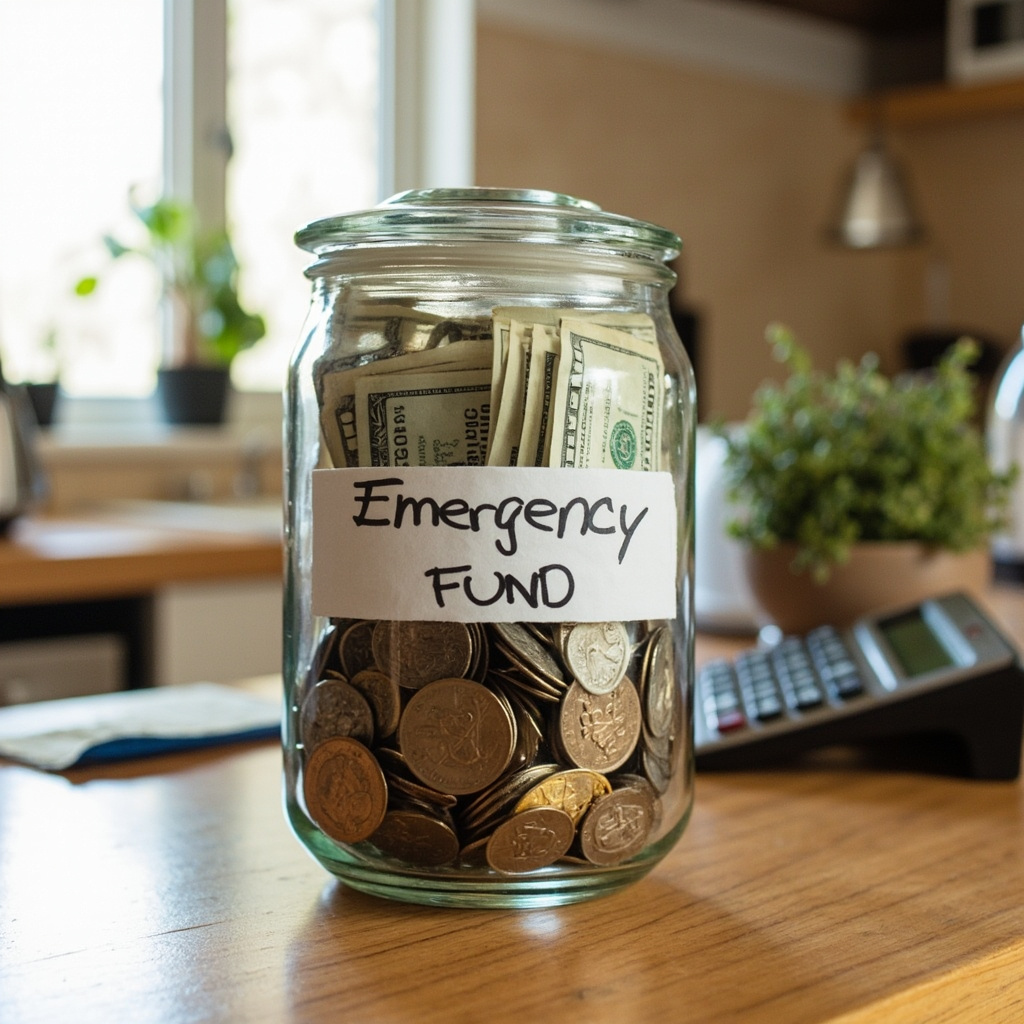
Mistake 2: raiding Emergency Savings to Pay Debt
If you wipe out your entire emergency fund to pay debt, you will likely go back into debt the next time an unexpected expense arises. Aim to keep at least $500-$1,000 in savings even while paying off debt.
Mistake 3: Hiding Debt from Each Other
Financial secrets are one of the leading causes of relationship stress. Both partners need full visibility into all debts, all incomes, and all spending. No exceptions.
Mistake 4: Targeting the Wrong Debt First
Going after the debt that feels most urgent rather than following your chosen method leads to confusion and wasted money. If you have chosen avalanche, resist the temptation to pay off a smaller debt first "just to get it done." Stick to the plan.
Mistake 5: Not Adjusting After a Payoff
When a debt is paid off, the natural instinct is to relax. Do the opposite: immediately redirect that payment to your next target debt. This is the "snowball" effect in action and it dramatically accelerates your timeline.
Mistake 6: Treating It as a Solo Effort
If one partner handles all the finances and the other is disengaged, the process is more fragile. Both partners should understand the plan, know why it works, and feel ownership over the outcome.
Tools and Resources for Couples
Budgeting Apps

YNAB (You Need A Budget) — One of the most popular budgeting tools for couples. Both partners can access the same budget, track spending by category, and see exactly how each payment brings you closer to debt freedom. Available at Amazon US with affiliate tag=theforge05-20 or Amazon AU with tag=doublefury-22.
Monzo Money Coach — A UK-based option for couples with joint account features and debt tracking.
Debt Payoff Calculators
Undebt.it (undebtit.com) — A free tool that lets you input all your debts and compare snowball vs avalanche scenarios side by side. Particularly useful for couples who want to see the exact dollar difference between methods before committing.
NerdWallet Debt Payoff Calculator — Enter your debts, interest rates, and monthly payment amount to see a full payoff timeline under both methods.
Books on Couples and Debt
- The Two-Income Trap by Elizabeth Warren — Excellent resource on the specific financial pressures couples face.
- Money and Couples by Scott Palmer — Practical advice on navigating money conversations as a team.
- Total Money Makeover by Dave Ramsey — The foundational text for the debt snowball method.
Related Articles on Budgeting for Couples
For more guidance on managing household finances as a team, explore these related guides on budgetingforcouples.com:
- /how-to-create-a-joint-budget-that-works-for-both-of-you — A step-by-step guide to building a household budget both partners actually stick to.
- /emergency-fund-for-couples-how-much-do-you-really-need — How to build a safety net without derailing your debt payoff plan.
- /best-money-apps-for-couples-2026 — Our roundup of the best apps for couples managing money together.
Frequently Asked Questions
What is the debt snowball method for couples?
The debt snowball method is a debt payoff strategy where you list all debts from smallest to largest balance and make minimum payments on everything while putting extra money toward the smallest debt first. Once that is paid off, you roll that payment into the next smallest, creating a snowball effect. For couples, it provides quick psychological wins that keep both partners motivated.
What is the debt avalanche method?
The debt avalanche method targets debts with the highest interest rate first, regardless of balance size. You make minimum payments on all debts while putting every extra dollar toward the highest-interest debt. Once it is paid off, you move to the next highest-rate debt. This method saves the most money mathematically over time.
Which debt payoff method saves couples more money?
The avalanche method saves couples more money in total interest paid because it eliminates high-rate debt faster. However, the snowball method often works better for couples who need visible progress to stay motivated. Research from Northwestern University found that the feeling of accomplishment from paying off a debt improves follow-through — which sometimes makes snowball more effective in practice.
Can couples combine snowball and avalanche methods?
Yes, many couples use a hybrid approach: pay off one or two small debts using the snowball method for quick motivation, then switch to the avalanche method for the remaining debt. This combines psychological wins with mathematical efficiency.
How should couples decide which debt payoff method to use?
Couples should consider three factors: total interest at stake (if the spread between highest and lowest rates is large, avalanche wins mathematically), how motivated they are by quick wins (if either partner needs momentum, snowball helps), and whether they have multiple high-interest debts (avalanche is better when rates vary significantly).
What is the best debt payoff strategy for couples on a tight budget?
On a tight budget, couples should first build a small emergency fund of $500-$1,000 to avoid new debt when unexpected expenses arise, then choose either snowball or avalanche based on interest rate spread. The key is agreeing on a monthly extra payment amount together and treating debt payoff as a shared team goal rather than an individual one.
Sources & Methodology
-
Northwestern University Kellogg School of Management, "The Behaviorally Anchored Debt Payoff Strategy," Journal of Consumer Research, 2023. Available at: https://kellogg.northwestern.edu. This study examined debt payoff motivation and found that early wins from paying off small debts significantly improved follow-through on subsequent financial commitments.
-
Consumer Financial Protection Bureau (CFPB), " Paying Off Debt: Strategies for Managing Household Debt." Available at: https://www.consumerfinance.gov. The CFPB provides official guidance on debt management and compares payoff strategies for consumers.
-
Federal Reserve, "Report on the Economic Well-Being of U.S. Households in 2023." Available at: https://www.federalreserve.gov. This annual report includes data on household debt levels, debt management behaviours, and the prevalence of debt payoff as a financial priority.
-
U.S. Department of the Treasury, "Financial Literacy and Education Commission: Best Practices for Debt Management." Available at: https://home.treasury.gov. Official guidance on federal resources for consumers managing debt.
-
National Endowment for Financial Education (NEFE), "Money Habitudes: Understanding Financial Behaviour in Couples." Available at: https://www.nefe.org. Research on how couples communicate about money and make joint financial decisions.
-
FICO, "Understanding Credit Utilization and Its Impact on Credit Scores." Available at: https://www.fico.com. Data on how debt payoff strategies affect credit scores over time.
-
Investopedia, "Snowball vs Avalanche Method: Which Is Better?" Updated 2026. Available at: https://www.investopedia.com. A widely cited comparison of the two primary debt payoff methods.
About the Author
Rachel Thompson, CFP is a Certified Financial Planner with over 12 years of experience helping couples navigate joint finances, debt payoff, and long-term wealth building. She specialises in practical, actionable financial advice that works for real households — not just idealised scenarios. Rachel has been featured in Forbes, The Wall Street Journal, and CNBC, and she is a regular contributor to personal finance publications. She lives in Melbourne, Australia with her husband and two daughters, and manages the family budget using a hybrid debt payoff approach.
© 2026 Budgeting for Couples. All rights reserved. Budgeting for Couples is reader-supported: we may earn a commission from qualifying purchases via Amazon Associates links in this article. This does not affect our editorial independence or recommendations.