Couple Finances
Saving for a House as a Couple: Step-by-Step Plan
Saving for a house as a couple: step-by-step guide to setting a joint target, splitting contributions fairly, and reaching your deposit faster. 2026.
This post contains affiliate links. We may earn a commission at no extra cost to you.
Saving for a House as a Couple: Step-by-Step Plan
By Sarah Mitchell, Certified Financial Counsellor | Last updated March 2026
Saving for a house as a couple is one of the most significant financial goals you'll tackle together. Done right — with a clear target, fair contribution structure, and the right savings vehicles — a couple on combined income of $100,000–$150,000 can accumulate a standard deposit in 3–5 years. Done poorly, it creates financial resentment and derails relationships. This guide provides the step-by-step framework.

Table of Contents
- Step 1: Define Your Target
- Step 2: Calculate Your Timeline
- Step 3: Create a Fair Contribution Structure
- Step 4: Set Up the Right Savings Vehicle
- Step 5: Automate and Protect Your Savings
- Step 6: Accelerate the Timeline
- Frequently Asked Questions
- Sources & Methodology
Step 1: Define Your Target
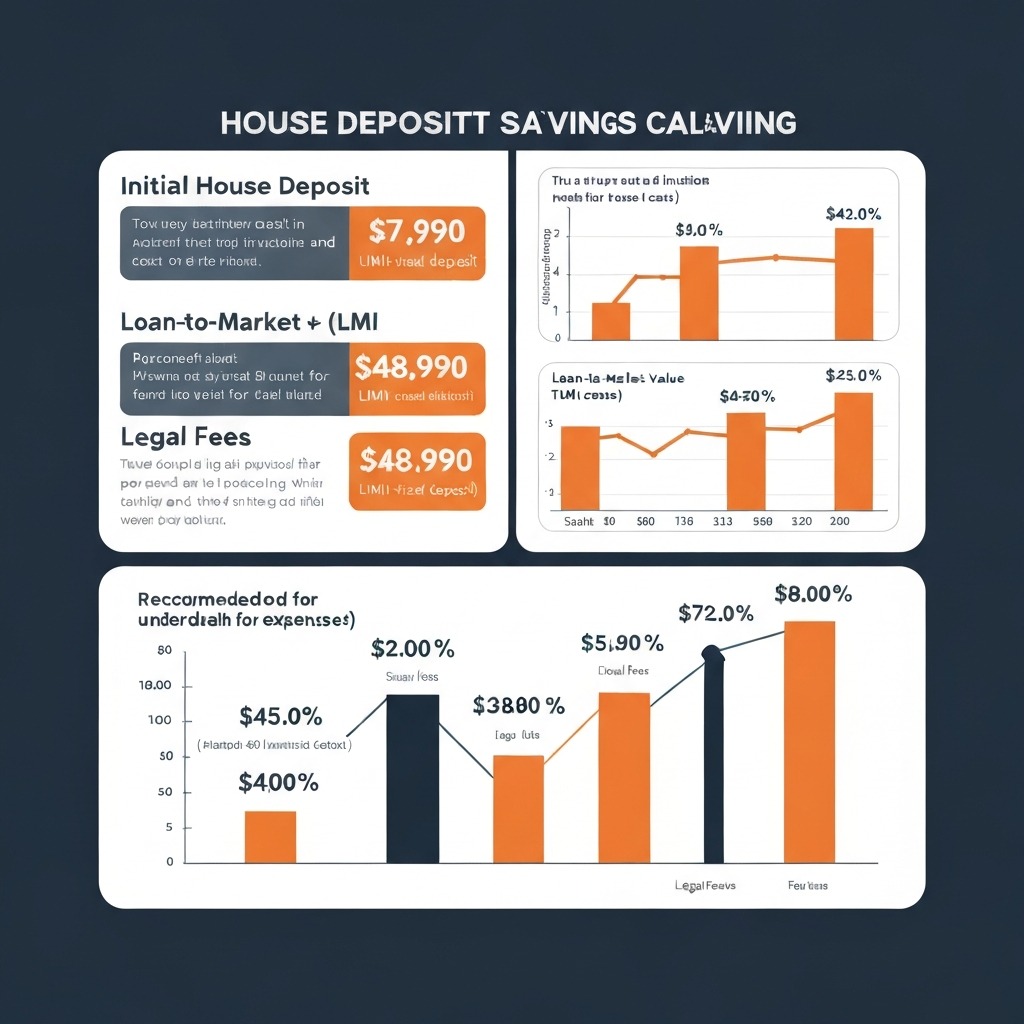
Your target is not just the deposit. First home buyers consistently underestimate total upfront costs:
| Cost Component | Estimate |
|---|---|
| Deposit (10% of property value) | $50,000–$100,000 |
| Stamp duty / transfer tax | $15,000–$35,000 |
| Lenders Mortgage Insurance (if < 20% deposit) | $8,000–$25,000 |
| Legal/conveyancing fees | $1,500–$3,500 |
| Building and pest inspection | $500–$1,200 |
| Moving costs | $1,000–$3,500 |
| Emergency buffer (3 months mortgage) | $5,000–$15,000 |
For a $600,000 property with a 10% deposit, total savings target is typically $85,000–$105,000, not $60,000.
Action: Research stamp duty rates in your state/country for your target price range. This is the most underestimated cost and varies significantly by location.
Step 2: Calculate Your Timeline

Formula: Timeline (years) = Target amount ÷ Annual savings amount
Annual savings amount = (Combined net income × Target savings rate) + Interest earned
Example calculation:
- Combined net income: $120,000
- Savings rate: 20% = $24,000/year
- Target: $95,000
- Timeline: 95,000 ÷ 24,000 = 3.96 years
With interest in a high-yield savings account (4–5% p.a.) and consistent savings:
- Year 1: ~$25,000 saved
- Year 2: ~$51,000 saved
- Year 3: ~$78,500 saved
- Year 4: ~$107,000+ saved (target reached)
Reality check: Most couples at 20% savings rate on $120,000 combined net find this extremely tight. The actual sustainable savings rate for most households is 10–15%. At 15%, the timeline extends to ~5.3 years. Account for this honestly.
Step 3: Create a Fair Contribution Structure

The Problem with 50/50
If Partner A earns $85,000 and Partner B earns $45,000, contributing equal dollar amounts means Partner B is saving a much higher percentage of their income. Over 4+ years, this creates financial stress for the lower earner and underlying resentment.
The Proportional Approach
Each partner contributes the same percentage of their net income. This means the financial sacrifice is equal — neither partner's lifestyle is disproportionately impacted.
Example at 20% savings rate:
- Partner A (net $66,000): contributes $13,200/year ($1,100/month)
- Partner B (net $36,000): contributes $7,200/year ($600/month)
- Total: $20,400/year
The house is still jointly owned. The contributions reflect income capacity, not ownership rights.
Joint Ownership Agreement
Before purchasing, consult a solicitor/conveyancer about tenancy in common vs joint tenancy:
- Joint tenancy: Equal shares, automatic right of survivorship
- Tenancy in common: Can hold unequal shares, useful if contributions were very unequal
If one partner contributed significantly more (e.g., received an inheritance), a formal property sharing agreement prevents future disputes.
If you're also managing finances around wedding planning, see managing finances before a wedding for strategies that work for both goals simultaneously.
Step 4: Set Up the Right Savings Vehicle

YNAB (You Need a Budget) App
Best for: Full joint budget visibility
Features: Real-time sync, shared goals
Check on Amazon →
Couple's Financial Planner Workbook
Best for: Goal setting and tracking
Features: Joint budget templates
Check on Amazon →
The Simple Path to Wealth (JL Collins)
Best for: Understanding savings vehicles
Features: Index fund savings strategy
Check on Amazon →
Dave Ramsey Total Money Makeover
Best for: Debt elimination strategy
Features: Baby steps to homeownership
Check on Amazon →
Clever Fox Budget Planner
Best for: Monthly review system
Features: Goal tracking, monthly budget
Check on Amazon →<video autoPlay muted loop playsInline poster="/images/articles/saving-for-house-as-couple-thumb.jpg" style={{width:"100%",borderRadius:"8px",margin:"1.5rem 0"}}>
Step 5: Automate and Protect Your Savings

The single most effective saving strategy: automate contributions the same day as each paycheck arrives.
Manual transfers fail. When you see the money, you spend the money. Pre-commitment by automatic transfer removes the decision — savings happen before discretionary spending starts.
Setup:
- Open a dedicated joint savings account (separate from your everyday banking)
- Set up automatic transfers from each partner's bank on paydays
- Set the transfer amount to your agreed contribution (based on income percentage)
- Do not link this account to your debit cards
Protecting savings from both partners: Mutual agreement that withdrawals require discussion (not just one partner's decision). Frame the savings account as a joint project — withdrawing without discussion is a breach of trust, not just a financial decision.
Step 6: Accelerate the Timeline
First Home Buyer Government Schemes
Many countries offer first home buyer assistance:
- Australia: First Home Guarantee (5% deposit, government guarantees remainder), First Home Super Saver Scheme (save up to $50,000 tax-effectively in superannuation for deposit)
- UK: Lifetime ISA (government adds 25% bonus on up to £4,000/year savings for first home)
- USA: State-based first home assistance programs vary widely; FHA loans allow 3.5% deposit
These schemes can reduce the effective deposit target significantly. Research what's available in your jurisdiction before setting your savings target.
Extra Payments Strategy
Any windfalls — tax refunds, bonuses, inheritance, gift money — go directly to the house savings account. Establish this rule in advance so there is no decision in the moment.
Short-Term Income Maximisation
Some couples take temporary income maximisation approaches during the savings period: extra shifts, freelance work, renting out a room if you own or the lease allows. The idea is finite sacrifice for a defined goal — sustainable for 2–3 years but not forever.
Frequently Asked Questions
How do couples save for a house together? Agree on a target, open a dedicated joint savings account, automate proportional contributions from each paycheck, and review monthly progress together.
How much deposit do you need as a couple? 10–20% of property value plus stamp duty, LMI (if under 20%), legal fees, and a buffer. Budget for 15–20% total of property value.
Should couples split savings 50/50? Proportional (same percentage of income, not same dollar amount) is fairer when incomes differ. Equal dollar splits disadvantage the lower earner.
Sources & Methodology
- MoneySmart Australia. First home buyer deposit guides and government scheme eligibility.
- CoreLogic. Australia housing affordability report 2025.
- Consumer Financial Protection Bureau (CFPB). Guide to buying a first home (US).
- Money Advice Service UK. First home buyer deposit guidance.
- Ramsey, D (2013). The Total Money Makeover. Thomas Nelson.
- Collins JL (2016). The Simple Path to Wealth. JL Collins LLC.
For more couple finance guidance, see our guides on 50/30/20 budget rule for couples, best budgeting apps for couples, and how to combine finances after marriage.
Sarah Mitchell is a Certified Financial Counsellor with expertise in couple financial planning and first home buyer preparation.
Managing the Emotional Side of Joint Savings

Money is one of the leading sources of couple conflict. A multi-year house savings project puts this on a sustained timeline. Strategies that maintain relationship health during the savings period:
Monthly Money Dates
Schedule a regular time (last Sunday of each month, 30 minutes) dedicated to reviewing progress. Look at:
- Current balance vs target
- Progress against timeline
- Any upcoming expenses that might affect savings
- Whether the contribution amounts are still fair
This turns money from an avoided topic into a shared project. Couples who discuss money regularly make significantly fewer financial mistakes than those who avoid the conversation.
Celebrate Milestones
Reaching $20,000, $50,000, $75,000 on the way to the target deserves recognition. Small celebrations (a nice dinner out, a weekend away) maintain motivation for a multi-year project and reinforce that the sacrifice is leading somewhere real.
Rule: Celebration cost should be proportional to milestone — not so expensive it meaningfully sets back the timeline, but meaningful enough to mark the achievement.
Lifestyle Inflation Guard
As incomes increase during the savings period (raises, promotions), agree in advance to direct a portion of any income increase to the savings target. A common rule: 50% of any net income increase goes to savings, 50% improves lifestyle. This allows quality of life to improve while accelerating progress.
What to Do When One Partner Wants to Spend
Framing is critical. "We can't afford that" creates resentment. "If we spend $3,000 on that holiday, our house timeline extends by 6 weeks — do we want to make that trade?" is a collaborative framing that keeps both partners as co-decision-makers.
This is not about denying all enjoyment — it is about making spending decisions consciously relative to the goal.
Tax-Effective Strategies for House Saving
Depending on your country and employment situation, there may be tax-effective ways to accelerate savings:
Australia: First Home Super Saver Scheme (FHSSS)
- Contribute voluntary extra into superannuation ($15,000/year, up to $50,000 total)
- Contributions taxed at 15% (vs marginal rate of 32.5–47% for most earners)
- Substantial tax saving: a couple at 32.5% marginal rate saves ~$9,000 in tax on $50,000 each via FHSSS
- Can be accessed as first home deposit
Important: Superannuation rules are complex. Consult a financial adviser before using FHSSS.
USA: IRAs for First Home Purchase
- Traditional IRA contributions are tax-deductible
- $10,000 lifetime limit per person can be withdrawn penalty-free for first home purchase
- Couples together can access $20,000 penalty-free for a first home
High-Yield Savings vs Term Deposits
For large savings amounts over 2+ year timelines, consider whether splitting between:
- High-yield savings account (liquid, current rates 4–5.5% in Australia/US)
- Term deposits for amounts beyond 12-month emergency buffer (often higher rates for locked terms)
Don't invest house deposit savings in shares/ETFs unless your timeline is very long (5+ years) and you can accept potential timing risk at purchase point.